
By Andromeda Falconeri
You do not need a basket of craft supplies to make an autumn walk worthwhile. A rustling tree, a few unhurried moments and a conversation led by your child are a lovely place to start.
For young children, a walk can be less about reaching a destination and more about noticing what is happening along the way. The colour of a leaf, the sound of the wind or the movement of a branch can become a shared moment of curiosity. In a Montessori-informed approach, the adult observes, follows the child’s interest and gives them time. There is no quiz to complete and no perfect response to produce.
Here are some simple autumn activities for toddlers and preschoolers that families can try on a walk in Aylesbury—or wherever a small detail catches your child’s attention.
Follow their interest—not an autumn checklist
An autumn walk does not need to become a lesson. The Association Montessori Internationale’s guidance for home reminds families that home does not have to recreate school, and that children benefit when adults observe their interests, respect their pace and allow choice and repetition.
So rather than arriving with a list of colours or objects to find, pause and see what your child notices first. They may watch a leaf spinning, listen to a bird or return to the same puddle several times. That repetition is not a distraction from the activity; it may be the activity. If they are ready to move on, move on. Five interested minutes can be more meaningful than a long walk they no longer want.
This same respect for curiosity and hands-on discovery sits at the heart of the advantages of Montessori education.
A few words can be enough: conversation ideas for younger children
For children around two to three, begin with what they are already looking at, touching safely or pointing towards. NHS guidance for chatting with children aged two to three suggests following a child’s interests and adding a little more language to the words they use.
If your child says, “Leaf,” you might reply, “A yellow leaf.” If they point to a branch moving above them, you could say, “The branches are moving.” Then pause. A response might be a word, a sound, a gesture or simply another look.
There is no need to ask them to repeat you. Your calm description gives them language connected to something that already matters to them. It is simple, responsive and requires no special equipment—an approach families may also recognise from our article on Montessori materials and everyday play.
Listen, wonder and tell a little story together
With children around three to five, the conversation can stretch a little further, while still following their lead. The NHS guidance for learning conversations with children aged three to five encourages adults to notice children’s interests, listen to outdoor sounds and talk about experiences afterwards.
Try comments such as, “I can hear the wind,” or, “That leaf is turning.” You might wonder together: “What did we notice on the way home?” A quiet child does not have to answer questions to take part. They may listen, point or choose to talk later.
At home, you could model a tiny story without testing their memory: “We walked past the tall tree. The wind moved the branches. Then we saw a bright red leaf.” Your child can add to it if they wish, but the pleasure is in sharing the memory, not recalling every detail.
Make it local: an unhurried moment in Bedgrove Park
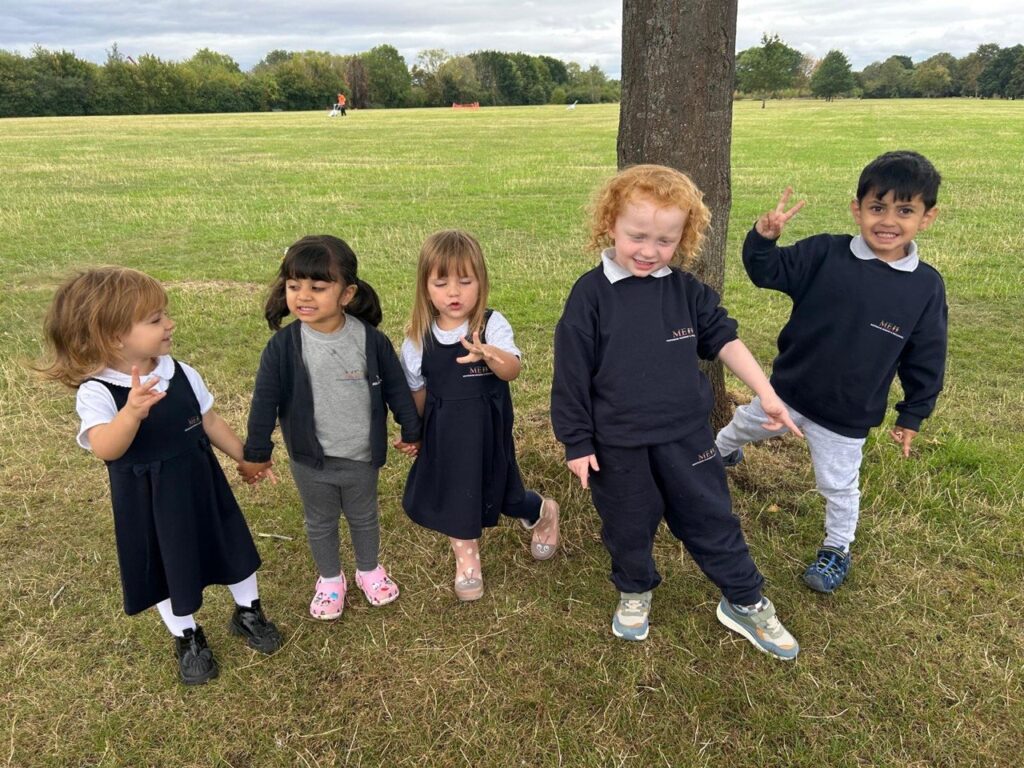
Bedgrove Park is close to ME Montessori on Ambleside in Aylesbury. Buckinghamshire Council describes the park as suitable for walking, with a woodland spinney, a wildflower meadow and hard-surfaced paths connecting its facilities.
It can be a lovely option for a family walk, but it is not the only one. Check the weather and ground conditions, and choose a place that suits your child and your family. A pavement tree, a view from the garden or even watching rain through the window can offer the same invitation to notice and talk. The valuable part is not the location; it is the shared attention.
Keep autumn discoveries for looking—not tasting
Autumn brings tempting small objects within reach. Keep younger children close and make the activity observation-led. NHS baby and toddler safety guidance warns that small objects can be a choking risk when children put them in their mouths.
Rather than offering loose conkers, acorns, berries or seeds to toddlers, enjoy their colours and shapes where they are. Leave unknown plants and fungi alone, and do not forage or taste anything you find. A safe conversation can be as simple as, “That berry is bright red. We can look with our eyes.”
Take one conversation home
Later, return to one thing your child noticed. They might draw it, find a similar picture in a familiar book or look at a nature photo an adult took. You could say, “I remember the crunchy leaves,” and leave space for them to join in—or not.
If you are concerned about your child’s speech or communication, speak to your health visitor, nursery key person or local speech and language service. A relaxed walk can create connection, but it is not a test or a substitute for professional support.
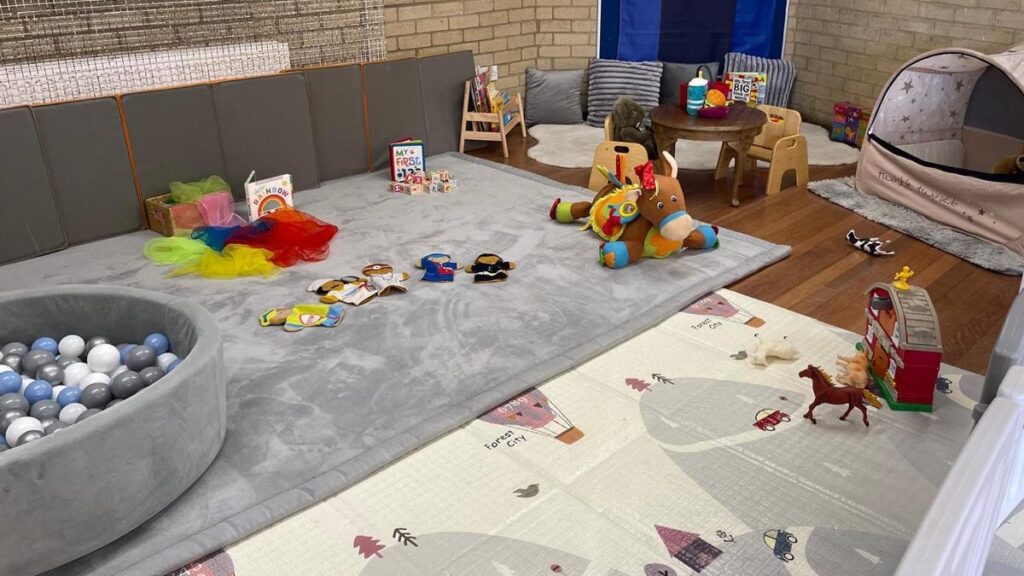
At ME Montessori, we value children’s curiosity, growing independence and individual pace. You can explore our toddler room and preschool room online, then visit us to see whether our setting feels right for your family.
Would you like to find out more about ME Montessori in Bedgrove? Book a visit and talk to our team about your child.
— Andromeda Falconeri
✨ Places available — book a private tour today.
📞 07873 403672
📧 [email protected]
🌐 www.memontessorinurseryandpreschool.com
📍 Bedgrove Community Centre, Bedgrove Park, Ambleside, Aylesbury, HP21 9TT