

By Andromeda Falconeri
Your child cried when you left this morning. You cried a bit in the car too, and now you're wondering if any of this is normal. Here's the honest answer from a nursery that settles new children every term: almost always, yes. The aim is not a tear-free first day. It is helping your child learn, through repeated safe experiences, that you leave, they are cared for, and you come back.
If you are still deciding when to begin, our guide to when your child might be ready for nursery may help. Settling in at nursery is a process, not a verdict on your parenting or your choice of setting.
Why children cry at drop-off (and why it's usually a good sign)
Crying at handover is usually a child's clearest way of saying, "I do not want this separation." Babies and toddlers do not yet have the language or sense of time to explain that feeling. Tears show that the relationship matters deeply; they do not, on their own, show that nursery is harmful or that your child will be unhappy all day.
Watch what happens next. Can your child accept comfort from a familiar adult? Do they show interest in the room or an activity? Are those moments becoming more frequent? A tearful handover can still be followed by play, food, rest and a warm reunion.
How long does settling in take? Realistic timelines by age
There is no honest countdown that fits every child. Most children settle within a few weeks, and every child is different. Age affects how children express separation more than it predicts an exact finishing date.
Younger children often need repetition: the same welcoming adult, familiar words and a predictable return. Older children may protest, become absorbed in an activity, or have a wobble later after a confident start.
Look for a direction of travel. Recovering sooner, accepting reassurance, joining an activity or talking positively about part of the day are signs of adjustment.
What a proper settling-in process looks like (short visits, key person, gradual separation — how we do it at ME Montessori)
At ME Montessori, we agree a settling-in plan with each family, starting with short visits and building up. The pace should respond to your child, not force them through a standard timetable.
Before separation begins, share what brings comfort and how your child asks for help. You and the key person can agree whether you stay at first or step out, how updates will be shared, and when the nursery should contact you if distress continues.
A key person gives your child a dependable adult to return to while the rest of the setting becomes familiar. If you are comparing nurseries this year, our plain-English guide explains what the 2026 EYFS changes mean for your child.
What you can do at home to help (drop-off routine, goodbye ritual, what to avoid — sneaking out, prolonged lingering)
Keep the morning as predictable as you reasonably can. Children borrow confidence from repetition, which is why routine matters in the early years.
Choose a short goodbye ritual and use the same words each time. Tell your child that you are leaving and will return; disappearing can make the next handover harder. Once you have said goodbye, let the key person take over. Long farewells can restart the separation.
At home, name the feeling without trying to talk it away: "You felt sad when I left, and I came back." Calm, truthful language helps children make sense of what happened.
When to worry: the signs that settling isn't working
One difficult drop-off is not the whole picture. Ask for a conversation if distress remains intense throughout sessions, your child cannot be comforted by any familiar adult, there is no gradual improvement, or changes in sleep, eating or behaviour continue and concern you.
This does not automatically mean the nursery is wrong. It means the plan needs reviewing. Compare what staff observe with what you see at home, then agree the next step. Before a solo visit, be clear with the key person about when they will contact you. You should not have to guess what happens if your child cannot recover.
How Montessori helps children settle (prepared environment, freedom within limits, key person, mixed-age community)
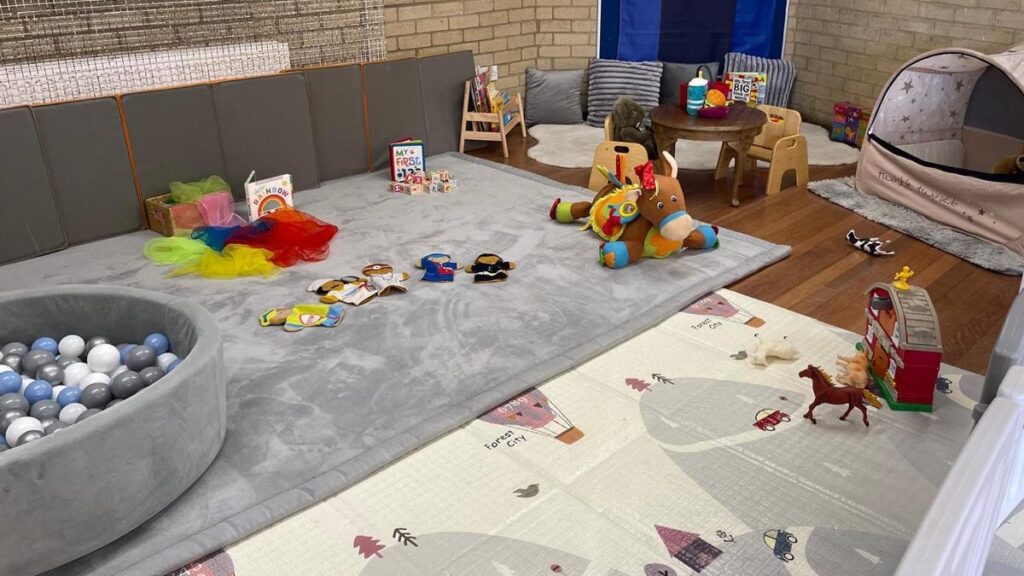
A Montessori room is prepared so that children can understand it: materials have a place, furniture is at their height and daily rhythms are recognisable. That order can feel reassuring when so much else is new.
Freedom within clear limits gives a child some control. They may not choose whether a parent leaves, but they can choose an activity and repeat it. Purposeful, hands-on work gives worried minds somewhere gentle to land. In a mixed-age community, newer children can watch peers who know the routine, while their key person remains the secure point of connection.
For families looking for a nursery in Aylesbury, the best way to understand settling-in is to see the environment and talk through your own child's needs. Call us on 07873 403672 or email [email protected].