

When parents come to look round a nursery in Aylesbury, they usually arrive with a list of practical questions. Opening hours. Funded places. Fees. How close it is to home or work. All of that matters. But underneath those questions there is almost always a quieter, more important one.
Will they actually know my child here?
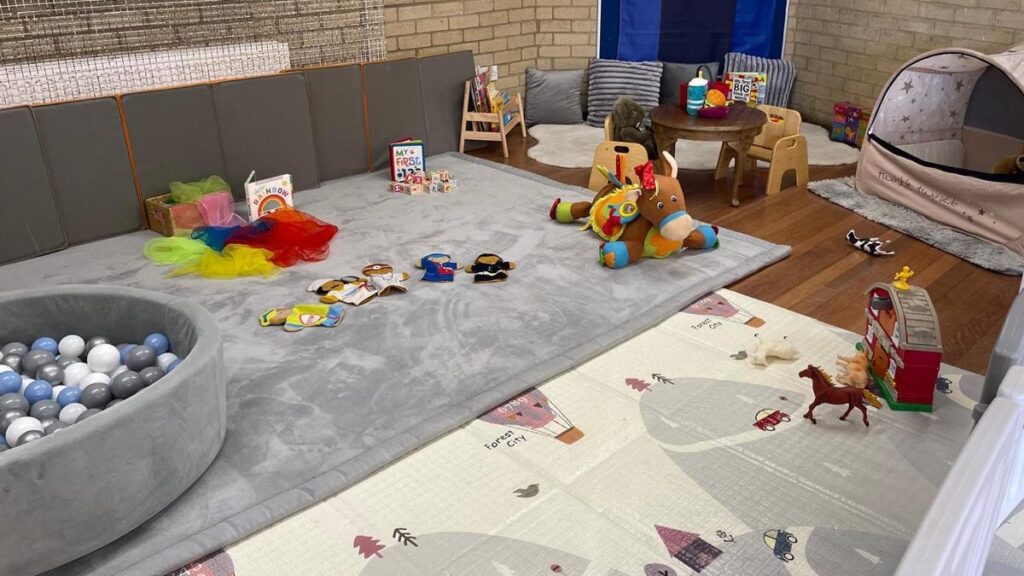
It is a hard thing to measure on a tour, and it is even harder to promise on a website. So rather than tell you that we know every child, we want to show you what that looks like in an ordinary day at ME Montessori Nursery and Pre-School in Bedgrove, Aylesbury. Because “small enough to know your child” is not a slogan. It is a set of everyday choices about how a nursery is run.
What “knowing your child” actually means
In a large, busy setting, a child can be well cared for and still be a little anonymous. Groups are big, staff rotate, and the adult who settles your child in the morning may not be the one who feeds them at lunch or tells you about their day at pick-up.
Knowing a child is different. It means an adult can tell you not just that your child ate well, but that they are going through a stretch of wanting to do everything themselves, that they have started seeking out the same friend each morning, or that the thing that used to upset them at drop-off no longer does. That kind of knowledge cannot be scaled up endlessly. It comes from small groups, familiar faces and time.
A consistent team, not a rotating cast
The single biggest factor in whether a child feels known is whether the same people are there each day. At ME Montessori, children see familiar practitioners rather than a constantly changing rota, and our manager knows the children by name — not as an exception, but as a normal part of how a small setting works.
Every child also has a key person: a named practitioner responsible for tuning in to how they are settling, what they are drawn to and how their needs are changing. When you have a question, you are not talking to a stranger reading from a screen. You are talking to someone who genuinely knows your child.
Small groups, so every child is seen
Much of the day happens in small groups. During shared reading, a practitioner can watch which pages a child lingers on and which words they are starting to try. In small-group work with the Montessori materials, an adult can notice the moment a child is ready for the next challenge — or the moment they need a little more time before moving on.
Those observations are only possible because the numbers are kept manageable. When a practitioner is responsible for a small group rather than a crowd, noticing becomes the default rather than the exception.
Following interests, confidence and changing needs
Children change quickly, and often in ways that are easy to miss if no one is watching closely. A child who was clinging to an adult in September may be leading play by half term. A toddler who showed no interest in mark-making suddenly wants to write their name everywhere.
Knowing a child means catching those shifts and responding to them: offering the activity that matches a new fascination, stepping back when confidence is growing, staying close when a change at home means they need more reassurance. This is the quiet, responsive work that a small setting is built to do well.
A real day, not a production line
A day at ME Montessori is not a conveyor belt of activities. Children are greeted by name as they arrive. There is time for focused work with the materials, time for shared stories, and plenty of movement — including walks to the local park and a picnic outdoors when the weather is kind. Our uniform helps children feel part of something together, without turning them into a uniform group of identical faces.
The rhythm is calm and predictable, which is exactly what young children need to feel secure enough to explore. Within that rhythm, there is room for each child to be an individual — because the adults around them have the time to treat them as one.
Communication that goes both ways
Knowing your child is not something that stays inside the nursery walls. It shows up in how a setting talks to you. Real communication is not a generic daily report; it is a practitioner who can tell you something specific and true about your child’s day, ask you how bedtime is going, and pick up on something you have mentioned about home.
When nursery and home share what they are seeing, the picture of your child becomes clearer for everyone — and your child benefits from adults who are genuinely on the same page.
What to look for on your own tour
Whichever nursery you are considering in Aylesbury, you can test all of this for yourself when you visit. Watch how adults speak to the children. Do they use their names? Do they get down to their level? Ask who your child’s key person would be, how big the groups are, and how the team will tell you about your child’s day. The answers will tell you a great deal about whether your child will be known or simply looked after.
If you would like more on this, our guide to choosing a nursery in Aylesbury walks through what to look for room by room, and you can read more about our approach on our about page.
Come and see it for yourself
The best way to know whether a nursery will truly know your child is to visit, watch and ask. We would be glad to show you an ordinary day at ME Montessori and introduce you to the people who would be caring for your child.
Schedule a private tour of ME Montessori Nursery and Pre-School in Bedgrove, Aylesbury, and see for yourself what it looks like when a nursery is small enough to know your child.
Andromeda Falconeri
ME Montessori Nursery and Pre-School