
If your child started nursery this September, the rulebook changed with them.
On 1 September 2026, a new version of the Early Years Foundation Stage — the EYFS — came into force for every registered nursery, preschool and childminder in England. Most of the changes are about safety: how babies sleep, who is allowed near children, and what nurseries must report, and to whom.
Here is what actually changed, in plain English — and what it means when you are choosing a nursery.
What is the EYFS?
The EYFS is the statutory framework for early years providers. It sets the standards every registered setting must meet so that children learn and develop well and are kept healthy and safe. It is not guidance or best practice — it is a legal requirement, and Ofsted inspects against it.
There are now two versions: one for childminders and one for group and school-based providers like us. Both were updated this September.
What changed on 1 September 2026?
The Department for Education publishes its own summary of the changes. Five of them matter most to parents.
Safer sleep is now written into the rules themselves
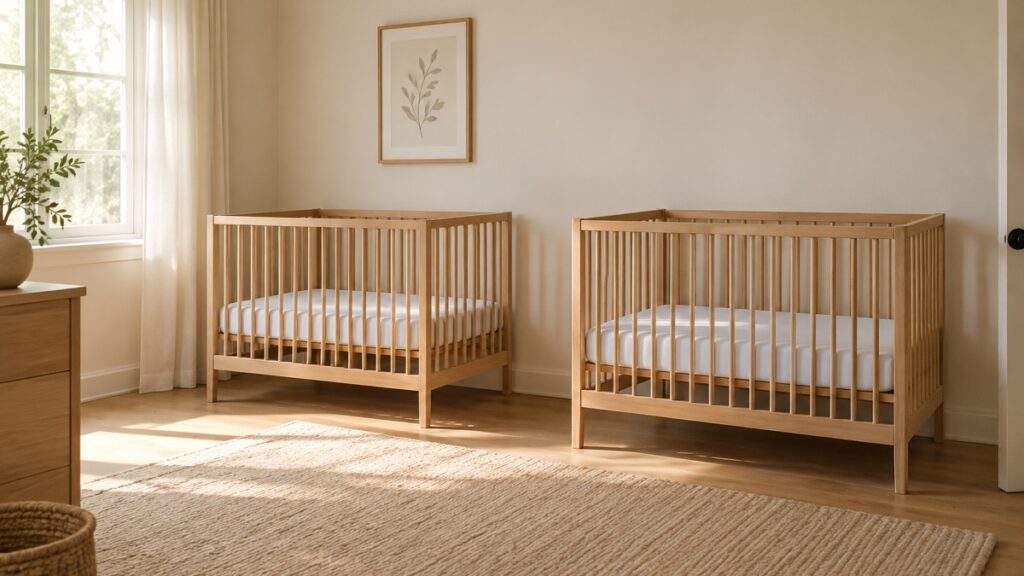
Until now, the EYFS pointed providers out to separate safer sleep guidance. From September, the requirements sit in the main body of the framework itself (paragraph 3.86), in detail: babies placed on their backs, in their own separate sleep space, on a firm flat surface; nothing in the cot except a firmly tucked sheet or a well-fitted sleep bag; a recommended room temperature of 16–20°C; an adult in the same room for every sleep for babies under six months; and frequent checks on every sleeping child.
Sleep safety is no longer something a nursery should follow. It is something it must follow — and something it is inspected against.
Everyone around your child is vetted — including volunteers
Enhanced criminal records (DBS) checks, with a barred list check, are now explicitly required for everyone aged 16 and over who works directly with children — including volunteers, even supervised ones (paragraph 3.15). And a new employee cannot start work until their check has been received (paragraph 3.17). Supervised volunteering used to sit in a greyer area; it no longer does.
Allegations must be reported at a lower threshold
Nurseries must now inform Ofsted of any allegation of "harm" by anyone living, working or looking after children at the setting (paragraph 3.10). The old threshold was "serious harm". Lowering the bar means concerns reach the regulator earlier, and failing to report is an offence.
No banned dog breeds on nursery premises
Registered childcare cannot be provided from any premises where a banned breed — including the XL Bully — is kept or is present, even if the owner holds an exemption certificate (paragraph 3.82). The same rule now extends to nannies and voluntarily registered providers.
New expectations on screen use
For the first time, screen use appears in the framework: settings must now "have regard to" the DfE's new screen use guidance for early years settings (paragraph 3.94), which builds on the guidance for parents published in March 2026.
What this means at ME Montessori
Regulation catching up with practice is a comfortable place to be. When we read the new framework against our own policies, most of it described what we already did.
Everyone who works with your child here is vetted, with enhanced criminal records checks completed before they work with children — the standard the framework has now extended to every volunteer as well.
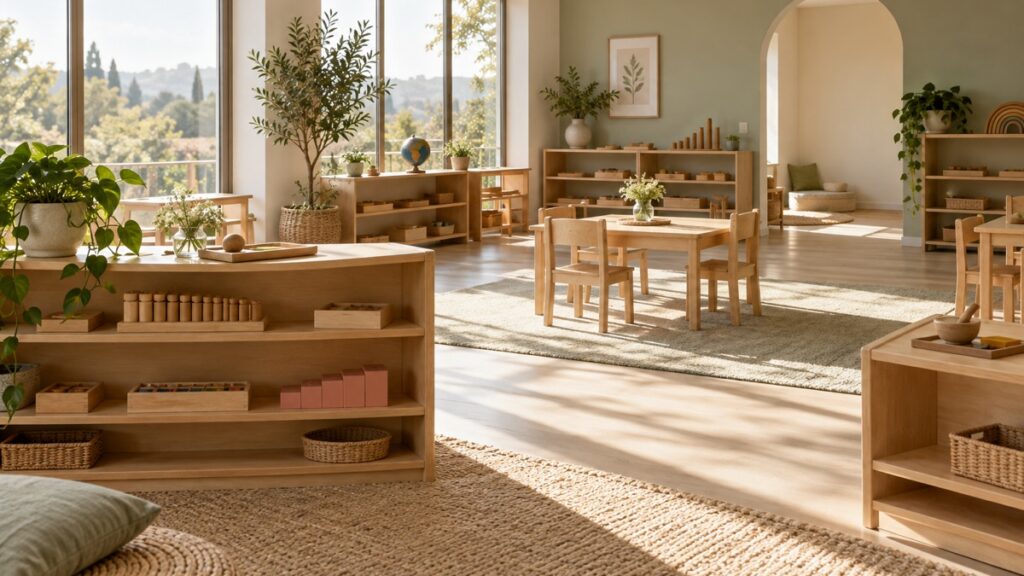
There are no screens in our classrooms. A Montessori room is built around real materials and real work — pouring, building, sorting, concentrating — and that is how our children spend their days, with their hands and their whole attention.
And rest here is calm, unhurried and closely supervised, run along the lines the framework now sets out: babies on their backs in clear cots, and every sleeping child checked, within sight and hearing of an adult.
Ask us about any of it on your tour — we would rather show you than tell you.
Five questions to ask any nursery
Wherever your child goes — us included — these five questions will tell you most of what you need to know:
- Where do the babies sleep, and can I see the sleep room?
- How often do you check sleeping children, and how is it recorded?
- Is everyone here — staff, students and volunteers — DBS-checked before they start?
- What is your policy on screens in the classrooms?
- When did you last review your policies against the September 2026 framework?
A good nursery will welcome all five. If any of them gets a vague answer, keep looking.
Come and see it for yourself
Rules on paper matter. What matters more is how a nursery lives them at two o'clock on a Tuesday afternoon, when the babies are asleep and the toddlers are busy. That is something you can only judge in person — and we would love to show you.
✨ Places available — book a private tour today.
📞 07873 403672
📧 [email protected]
🌐 www.memontessorinurseryandpreschool.com
📍 Bedgrove Community Centre, Bedgrove Park, Ambleside, Aylesbury, HP21 9TT